
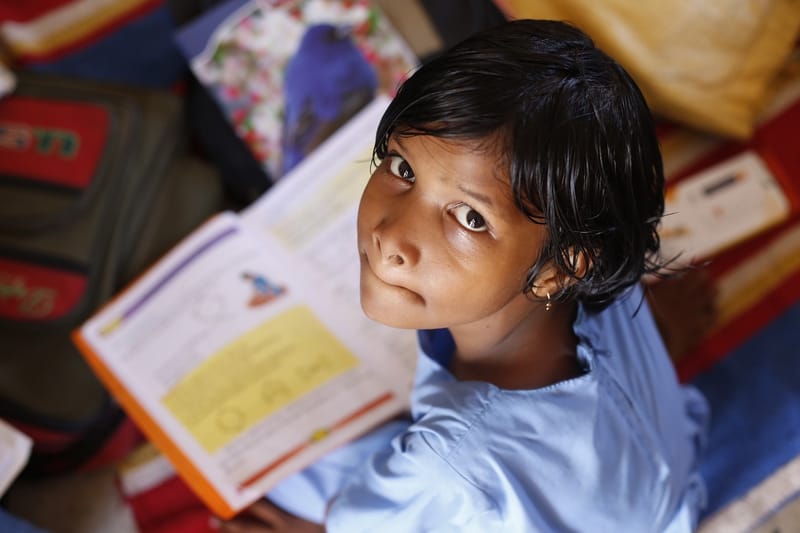
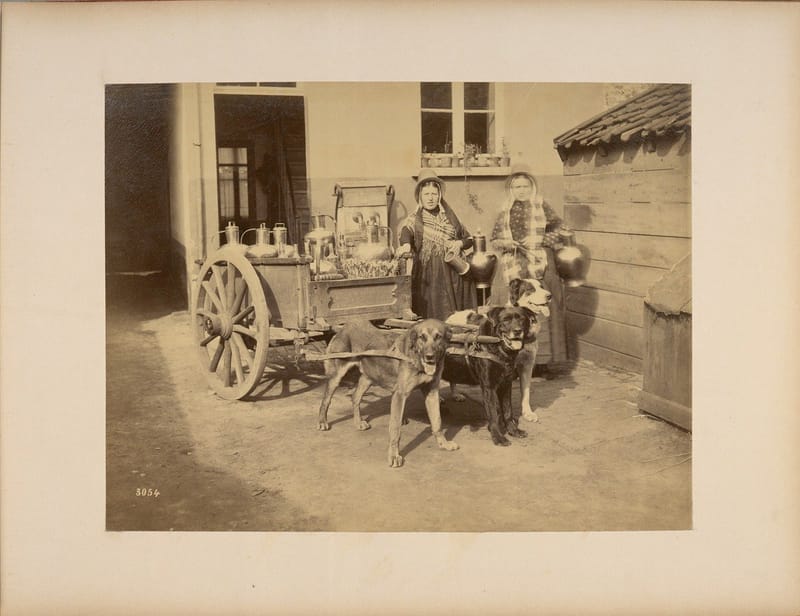
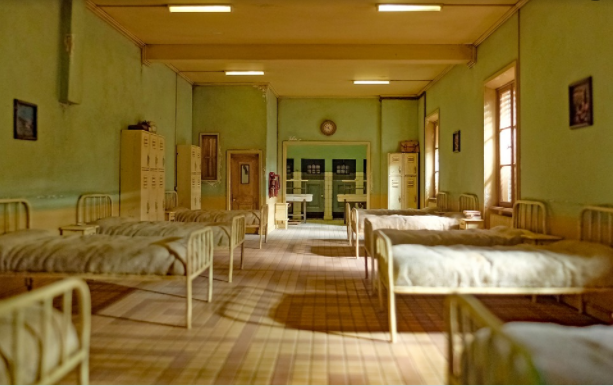
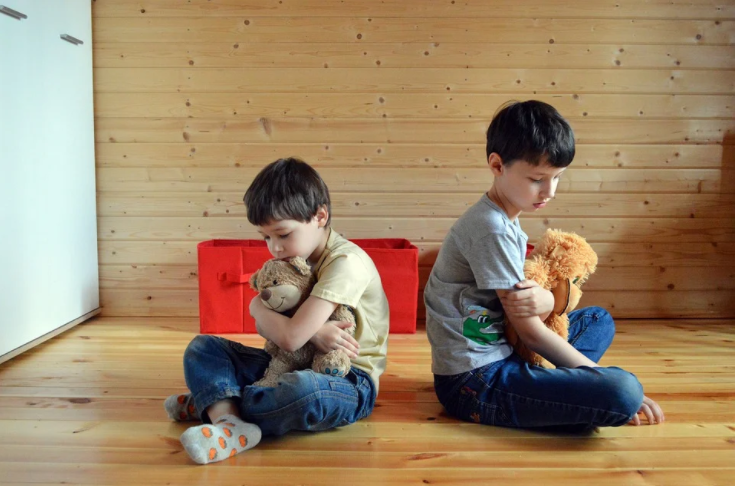


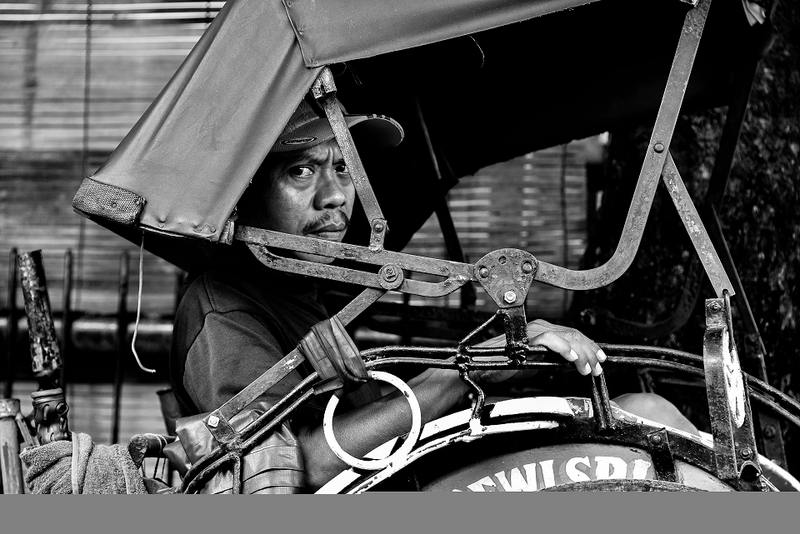

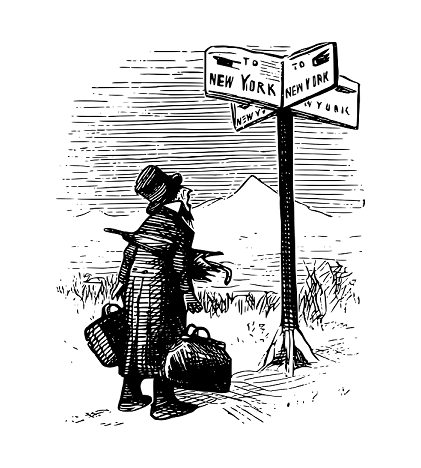

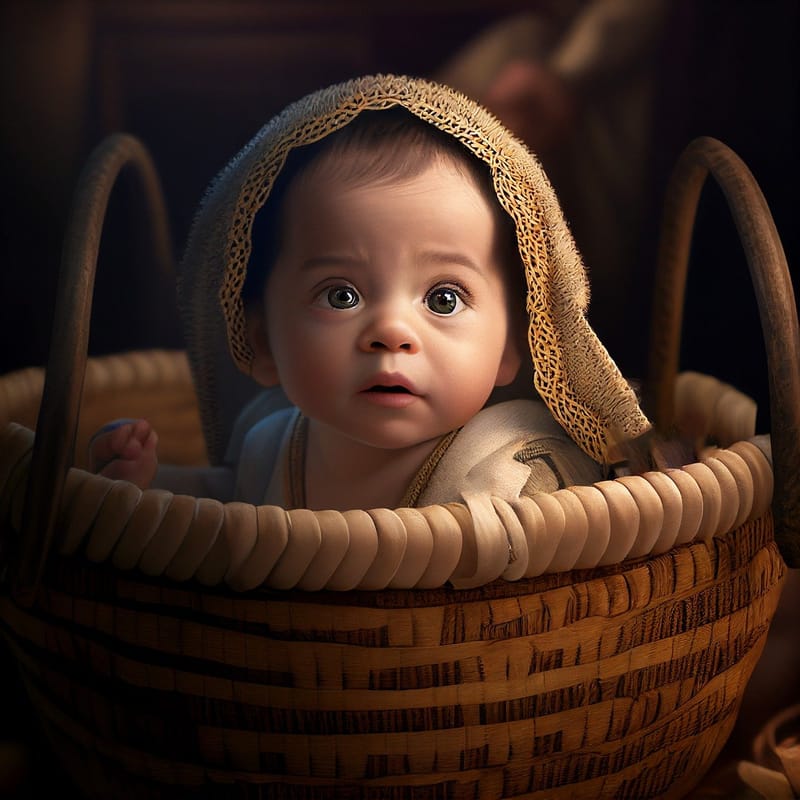
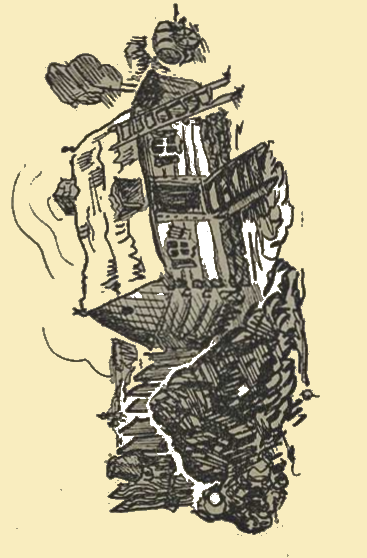
Herschel, an orphaned and poor boy, four years old. Alone in the world, dreaming of reaching the Land of Israel
read moreIsrael Reads Korczak
Reading short stories by Janusz Korczak
about
ישראל קוראת קורצ'אק הוא פרויקט קריאה בסיפוריו הקצרים של יאנוש קורצ'אק.
המכון החינוכי הישראלי ע"ש יאנוש קורצ'אק והמכון הפולני בתל אביב חברו יחד כדי להביא לראשונה בפני הציבור בישראל את סיפוריו הקצרים של קורצ'אק בפורמט של סרטונים קצרים, אשר בכל אחד מהם מוצג בקריאה סיפור קצר שכתב יאנוש קורצ'אק.
בימים אלה של קורונה, בשעה שהציבור נקרא להקפיד על "ריחוק חברתי" פרויקט זה נועד לרענן ערכים כמו כבוד לזולת, אחריות, הגינות, יושר, סובלנות, אמפתיה, יחסי קהילה ועוד, ערכים אותם ביטא יאנוש קורצ'אק בכתביו והם חשובים ורלוונטיים כל כך גם אצלנו, כאן ועכשיו.
יאנוש קורצ'אק, הלא הוא ד"ר הנריק-הירש גולדשמיט, ההומניסט, הדמוקרט, הפלורליסט פורץ הדרך במאבק למען זכויות ילדים, כתב ללא לאות. כתביו הרבים, הכוללים סיפורים קצרים וארוכים, מאמרים, טקסטים פדגוגיים, כתבות עיתונאיות, הומרסקות, פיליטונים ומחזות, היו אחד הכלים בהם השתמש להעברת מסריו ולביטוי תפיסת עולמו החברתית והחינוכית, שהיא כה רלוונטית גם בימינו.
ביאנקה רולנדו עיצבה את הלוגו ואת סרטון הפתיחה, המלווה כל אחד מהסרטונים.
בעיצומם של ימי הקורונה הקשים, למעלה מ-80 אישה ואיש נרתמו ברצון לפרויקט זה. ללא כל תמורה הקדישו מזמן ומכשרונם וברצון טוב צילמו את עצמם בתנאים ביתיים כשהם קוראים את הטקסטים של קורצ'אק, ואת הסרטונים העמידו לרשות הציבור. על כך הוקרתנו, הערכתנו ותודתנו לכל הקוראות והקוראים ולכל הגורמים שבחרו לעודד ולתמוך בפרויקט ולאפשר את ההפקתו.
תודה מיוחדת לליטל פורת שהגתה את הרעיון מראשיתו.
תודה ליגאל דקל שצילם רבים מהסרטונים הנכללים באתר זה.
תודה לרוני דותן על תרומתו הרבה בקידום הפרויקט.
Israel Reads Korczak is a reading project dedicated to the short stories of Janusz Korczak.
The Janusz Korczak Israeli Educational Institute and the Polish Institute in Tel Aviv joined together to present, for the first time to the Israeli public, Korczak’s short stories in a series of short video clips — each one featuring a reading of a short story written by
Janusz Korczak.
In these times of COVID-19, when the public was called to observe “social distancing,” this project aimed to revive values such as respect for others, responsibility, fairness, honesty, tolerance, empathy, community relations, and more — values that Janusz Korczak expressed in his writings and that remain so essential and relevant, here and now.
Janusz Korczak, also known as Dr. Henryk-Hirsch Goldszmit, was a pioneering humanist, democrat, and pluralist in the fight for children’s rights. He wrote tirelessly. His many writings — including short and long stories, articles, pedagogical texts, journalistic pieces, humorous sketches, feuilletons, and plays — were among the main tools he used to convey his messages and express his social and educational worldview, which continues to resonate to this day.
Bianka Rolando designed the project’s logo and the opening sequence that accompanies each of the videos.
In the midst of the difficult days of the pandemic, more than 80 women and men volunteered with great willingness to participate in this project. Without any compensation, they generously gave their time, talent, and goodwill to film themselves at home reading Korczak’s texts — and made the videos available to the public. For this, we offer our deepest appreciation, gratitude, and thanks to all the readers and to all those who supported and encouraged the project and helped make its production possible.
Special thanks to Lital Porat, who conceived the idea from the start.Thanks to Yigal Dekel, who filmed many of the videos featured on this site.Thanks to Roni Dotan for his great contribution in promoting the project.
Janusz Korczak
Korczak, the Jewish - Polish physician and educator, was born and raised as Henrik Goldschmidt. Janusz Korczak was his pseudonym from the beginning of his literary career. He was active in Poland in the 1920s and 1930s.
From 1912 to 1942 he ran the Jewish orphanage in Warsaw (Dom Sierot),
and from 1919 to 1939 he was a took part in the pedagogical management of the Polish orphanage "Beiteinu".
In his educational approach, he applied values of respectful attitude toward the child and toward every person, choosing between good and bad, concern for the weak and responsibility towards others.
Korczak was innovative in the pedagogical principles he outlined in the educational frameworks in which he worked, and greatly influenced the development of dialogic education in Poland and worldwide.
Korczak was one of the forerunners of activities for children's rights and equal rights for children. The orphanages he founded and ran were one of the earliest attempts at democratic education, which also included a children's tribunal. One of the pioneers in the field of child and adolescent rehabilitation and educational diagnosis, and the pioneer of research in the field of physical and mental development of the child. Author of books in the field of theory and practice of education, alongside children's books.
He was a Polish Jew who declared all his life that he belonged to both nations. During the Holocaust, when the children of his orphanage in the Warsaw ghetto were sent to Treblinka, he refused a salvation offer to himself alone and chose to die in Treblinka with his protégés, thus becoming one of the great historical-Jewish symbols of our time.
From 1912 to 1942 he ran the Jewish orphanage in Warsaw (Dom Sierot),
and from 1919 to 1939 he was a took part in the pedagogical management of the Polish orphanage "Beiteinu".
In his educational approach, he applied values of respectful attitude toward the child and toward every person, choosing between good and bad, concern for the weak and responsibility towards others.
Korczak was innovative in the pedagogical principles he outlined in the educational frameworks in which he worked, and greatly influenced the development of dialogic education in Poland and worldwide.
Korczak was one of the forerunners of activities for children's rights and equal rights for children. The orphanages he founded and ran were one of the earliest attempts at democratic education, which also included a children's tribunal. One of the pioneers in the field of child and adolescent rehabilitation and educational diagnosis, and the pioneer of research in the field of physical and mental development of the child. Author of books in the field of theory and practice of education, alongside children's books.
He was a Polish Jew who declared all his life that he belonged to both nations. During the Holocaust, when the children of his orphanage in the Warsaw ghetto were sent to Treblinka, he refused a salvation offer to himself alone and chose to die in Treblinka with his protégés, thus becoming one of the great historical-Jewish symbols of our time.
Speech by the President of the State, Mr. Reuven Rivlin
נשיא המדינה, מר יצחק הרצוג קורא מסיפורי יאנוש קורצ'אק
Mr. Yitzhak Herzog
President of the State of Israel
The President of the State, Mr. Yitzhak Herzog, reads the farewell blessing of Janusz Korczak from his adult students who completed their stay at the orphanage and went out into the big world
המסַפרות והמסַפרים
Honorable President of the State, Mr. Yitzhak Herzog
The 11th President of the State of Israel
President of the Supreme Court, Honorable Justice Esther Hayut
Marek Magierowski
Polish Ambassador to Israel
Dr. Alex Ben Zvi
Former Israeli Ambassador to Poland
A.B.Yehoshua
Writer, essayist and playwright, winner of the Israel Prize for Literature and Poetry
Aviv Liron
Actor, storyteller, creator of the story theater "Nonsense in Raspberry Juice"
Aharon Barnea
Orientalist. Former journalist and TV personality, reporter and commentator on Arab affairs
Aharon Perrera - Aharon Perrera
Singer, actor, TV host and radio broadcaster
Uri Geller - Uri Geller
Illusion artist, magician, and Israeli entertainer
Uri Duvdevani
Group leader, circuit leader, abseiling and ODT guide, partner in the "Salchuk" venture - the coolest basket in Tel Aviv
Prof. Uri Yanay
Professor Emeritus of Social Work at the Hebrew University of Jerusalem, deals with victims of violent crime and justice.
Orna Sadgat Erez
Established and manages the Emek Hefer Foundation, a director of the Eilat Association, the Isef Foundation and the Football Referees Association. Former Head of the Women's Administration and Adviser to the Mayor of Herzliya
Achinoam Nini
Singer, composer and social activist
Judge Ayala Prokacha - Judge Ayala Prokacha
Retired judge in the Supreme Court, and president of the Movement for the Quality of Government.
Ilan Popko
Teacher, educator, director, creator - theater man
Itai Hermann
Quiz and game designer, developer and host of TV shows
Itamar Orlev
Writer, playwright and literary editor. Son of the writer Uri Orlev
Ela Haramati
Founder of the "Age Center" - a volunteer center to help with studies in the spirit of Korczak. Author of the book: "The boy who did not know fear" which tells the special life story of Gil, her son, who was killed in an accident when he was 17 years old.
Ella Mor and Tamir Dor - Ella Mor and Tamir Dor
Ella Mor is the director of the "Mosips" school in Modi'in, and Tamir Dor, a student at the school.
Eli Debkarov
A student in multidisciplinary Amal school, third place winner in the national competition "Rotary the Young Speaker"
Eli Nisan
Former journalist and TV reporter, lecturer in Arabic
Prof. Eliakim Rubinstein - Judge Prof. Eliakim Rubinstein
Former Deputy President of the Supreme Court, Secretary of the Government and Attorney General.
Amnon Kafkafi
Volunteer at the Center for the Yom Kippur War and a lecturer in the "Torch Transfers" unit of the IDF Education Corps
Prof. Asa Kasher
Professor Emeritus from the Chair of Professional Ethics and Philosophy of Practice and Professor Emeritus of Philosophy from Tel Aviv University
Asi Levy
Actress, creative musician and restaurateur
Dr. Ester (Esti) Shahaf Friedman
Criminologist, deals with justice from a merger. The granddaughter of Yitzhak Salzberg, who was a stockbroker at the Jewish orphanage, "Dom Shirot," of Janusz Korczak and Stepa Wilczynska in Warsaw
Aryeh Golan
Journalist and radio broadcaster, winner of the Sokolov Prize for Lifetime Achievement
Arnon Bruckstein
Guide, Veteran Jerusalem Instructors, Founder of the P. Sapir Institute for Jerusalem Studies in the Jewish Quarter
Prof. Boaz Sangero
Full professor of law, faculty member in the Department of Criminology at the Western Galilee Academic College and the School of Law at the Sapir Academic College, and the founder of the website "Review of the Criminal Justice System"
Billy Segal Gazelius - Billy Segal Gazelius
The Israel Broadcasting Corporation manages an archive here
Gideon Goldwasser
website designer and builder, video editor, DJ
Rabbi Galia Sadan - Rabbi Galia Sadan
A Reform rabbi and a central activist in the field of Reform conversion studios in Israel. Serves as the head of the court of the Council of Reform Rabbis in Israel.
David Senesh - David Senesh
clinical psychologist
General (res.) Doron Almog - General (res.) Doron Almog
Chairman of the board of the Jewish Agency Photo: David Salem for the Jewish Agency
Judge Dorit Beinisch
Former State Attorney, Judge and Retired Supreme Court President. She currently serves as Governor of the Open University.
Dorit Greenberg Lis - Dorit Greenberg Lis
Deputy Superintendent of the Israel Police, lawyer, head of the unit for auditing and police orders, third generation of Holocaust survivors
Dr. Dorit Zilberman
Writer and researcher of Israeli literature, winner of the Hebrew Writers' Prize, practices law
Dalia Dorner - Dalia Dorner
President of the Israel Press Institute, former judge of the Supreme Court
Dalia Tauber
Chairperson of the Korczak Educational Institute of Israel
Dalia Mazor - Dalia Mazor
Announcer, news presenter and Israeli TV host, one of the leading and most prominent television personalities of Channel One in the first four decades of its activity. Volunteers at a library for the blind and records reading books in her voice for listening.
Dan Kanner - Dan Kanner
Radio announcer and broadcaster, presenter at the Israel Broadcasting Corporation and host of ceremonies and events
Danny Kerman - Danny Kerman
Illustrator, satirist and designer. Illustrated about 500 books, including many well-known and beloved children's books. Initiated and published classical books in Hebrew, wrote and illustrated many books and travel guides. Illustrated in all major newspapers and won many awards.
Prof. Dan Shechtman
Professor of Research at the Faculty of Materials Science and Engineering at the Technion, Researcher of Material Structure, winner of the Israel Prize for Physics and the Nobel Prize in Chemistry
Dror Keren
Theater, film and television actor, dubber, playwright and director
Hadas Calderon
Actress, theater, television and film actress, playwright, screenwriter and Israeli producer, and artistic director of the National Theater for Children and Youth founded by Sami Levy
The educational staff, media empowerment trend, ORT Lilienthal, Ramla - The educational staff, media empowerment department, ORT Lilienthal, Ramla
Adv. Vered Windman
Director General of the Council for the Welfare of the Child, Lecturer on the Rights of the Child at the School of Social Work at the Hebrew University of Jerusalem, and Advocate in the field of Child Rights and Social Change
Zohar Aviv - Zohar Aviv
Zohar Aviv lectures in schools and libraries (also on Zoom) about mental resilience, superheroes, and friendships in the age of screens, as reflected in her series – The Brain Power Group, The Miracle Hand, A Chilling Journey, The Power of the Heart. www.zoharaviv.com For reservations - 0522539765
Haim Belfer
An educator, the son of the late artist Yitzhak Belfer, who was an apprentice in the orphanage of Janusz Korczak and Stepa Wilczynska
Janusz Korczak's Short Stories
Legend
Who is a happy person?
A legend about a song
How music came into the world
A legend about soda
It is not enough that the struggle is right, it should be directed towards the right goal
Legend of our home
Embracing past memories in a changing world
The legend of life
Unreasonable hatred and the bitter laughter of fate
Love
What is important in life - wealth or happiness?
Love
The personification of love, in the form of a young girl, comes to the human world to see with her own eyes how her fans, human beings, admire her. To her amazement she discovers a huge and painful gap between the ideal and reality
Guest for a moment
In: How to love a child - boarding school
A variety of children's reactions to a stranger visiting their home
Happiness
Everyone wants to be happy, but what is happiness?
One and only
About one moment of happiness
After the trip
About content children and those who are never happy
After Death (Fantasy)
The results of our actions are joy for generations or weeping for generations
After the auction
Love and diligence overcome any difficulty
After many years
Criticism of the conduct of upper class girls and their attitude towards their lower class members
How God ran away from the church
In: St. Madmen
When people show respect to God, but their hearts are empty of faith and values
How to take?
The face of bribery as an accepted social norm
It is not a shame to make a mistake - the rules of life
Fear of making mistakes prevents experimentation, dampens challenges and blocks learning and development
To the sun
Three paths lead to the sun - to light, to knowledge, wisdom and progress: The path of truth, the path of love and the path of beauty. Three figures walk to the sun, each followed by many people. Even though their paths meet, and even though the three of them are headed to the same place - they refuse to walk together. But still, the hope that one day they will join forces and walk together - remains.
Don't be polite
A father whose life experience has taught him that society does not particularly value kindness and generosity, and he educates his son not to be polite
do not interfere
Insights from an educator
Eliezer De'er Glazer
Korczak's great grandfather who serves as a symbol of love for others, kindness and giving, while exercising discretion
Antosh the hunchback
On the upheavals of fate, self-confidence and self-belief in one's right to happiness
Antk
Reading books as a basis for connecting people
Antek escapes from the Count's estate
In: "Street children"
A street child explains to a philanthropist that donation and help are only useful when they meet the needs of the supported person and do not trample on his honor
I beg your pardon, children
On coming to terms with reality and accepting the existing in love
At Mrs. Kiri-Sklodowska's
About superficiality and chauvinism
عند النجار (at the carpenter's)
About the things that make a person happy
Illusions - internal problems
The shattering of the illusion of freedom and independence that adults create in children undermines the teenagers' trust in society and in themselves
Who does mom love
Conversation between a child and his hard-working mother, before bed time
The loneliness of old age
Diary - Confession - Balance Sheet and Will. An old man's Introspection
abroad
Is the neighbor's lawn really greener?
Peer Tribunal
About the members' tribunal, its aims and importance
A new school for girls
Chauvinism in the Itzla of feminism
At the grocery store
A couple of honest merchants who, for livelihood reasons, are having a hard time as they unsuccessfully try to cheat their clients
Farewell greeting
Korczak's blessing to his adolescent trainees who are parting from the orphanage to become independent adults
In: The five-year-old
How children's self-perception is formed
An obedient son
n innocence and good faith
A good craftsman
On the value of expertise and fairness
In the open field
A world is , it is always the same. It is the person looking at it, who sees it different every time
Gudjio and Rodgio
On the price of conformity
A cotton wool garden
In: The stories of the camps
Instructions for growing seeds on a cotton swab
door
Different ways to deal with a challenge
The vase
Storm of emotions - about the tension between anger and revenge and fear and pangs of conscience
Last in class
On hidden talent and self-fulfilling prophecy
The bad man
On prejudices and their disastrous consequences
The emancipatory
Social critique of the objectification of women and their status in society
The truth is on its way
People tend to know the truth and even treat it politely and like it, but the paths of the truth and of humans do not always meet (save for Yair Garboz)
The first visit
The power of a small act of kindness to affect an entire life
Stories waiting to be read
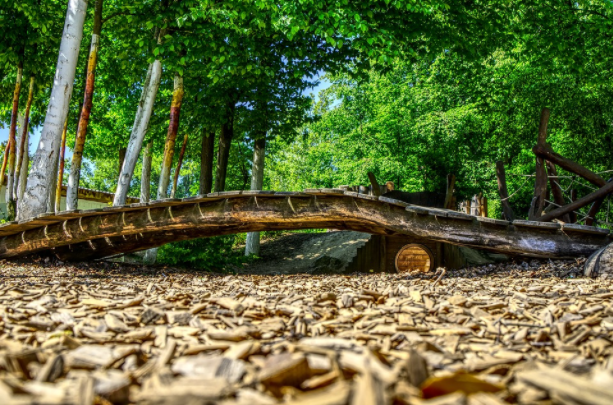
A ship named 'Storm'
n a game of imagination, the forest trees become a fleet of ships, and the children become seafarers
Learn More
You are like that and I am like that
Even in moments of insult and anger - respectful, honest and open discourse helps in creating good relationships
Learn More
building a fort
Division of roles, participation and hard work in building the fort for the joint play of all the children of the summer camp
Learn More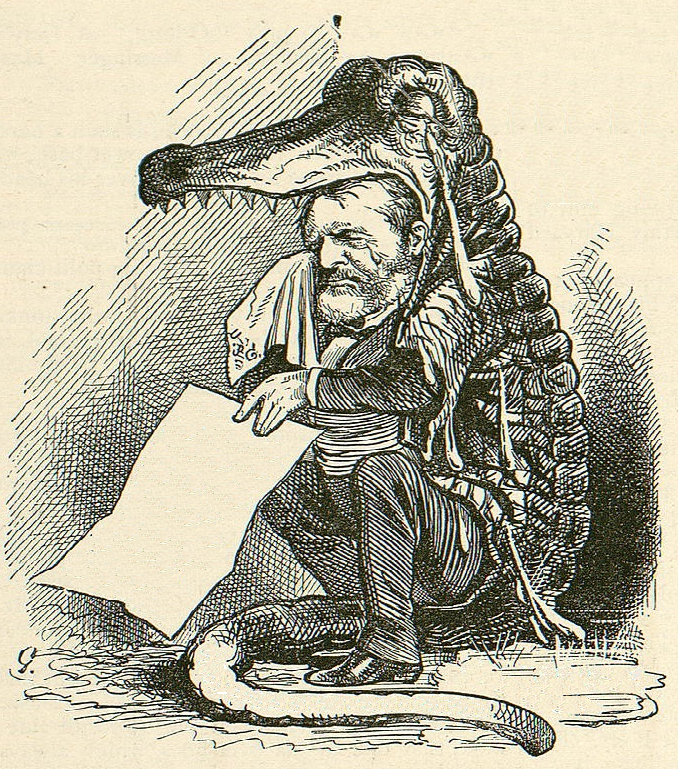
Not funny at all
Crocodile tears - alienation and inaction wrapped in the veil of so-called emotional care and apparent enlightenment.
Learn More
In praise of effort and perseverance - the rules of life
Thought, effort and constant labor increase the value of knowledge
Learn More
Humanity is awakening
No one can stop the human struggle for freedom, independence and rights
Learn More
The boys go to visit the girls
On the experience of the meeting and the children's discourse. In: Yozeks, Ishaks and Franks. The camp stories, chapter six
Learn More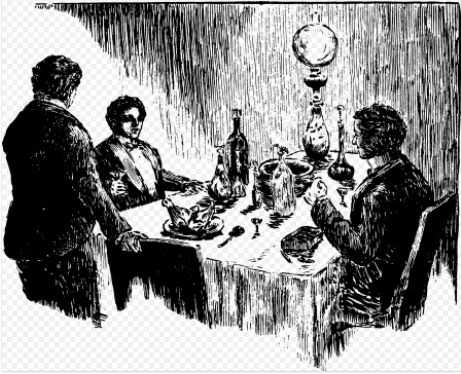
Children are ...
About choosing to ignore facts and beautify reality instead of changing it
Learn More
the maids
A cynical, critical and sarcastic description of the society's accepted attitude towards housekeepers
Learn More
The philanthropists
Criticism of philanthropists' considerations in choosing the goals of their donations
Learn More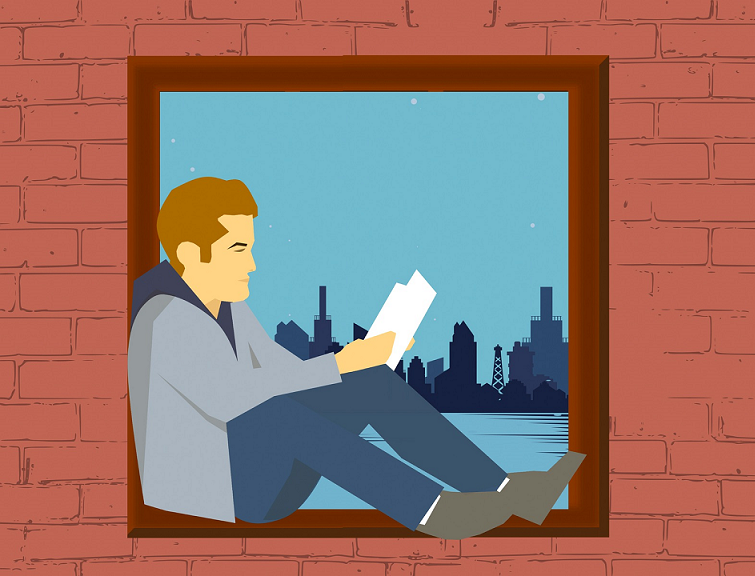
The boy who "swallows" books
From "The Glory", chapter five. On the character of an autodidact
Learn More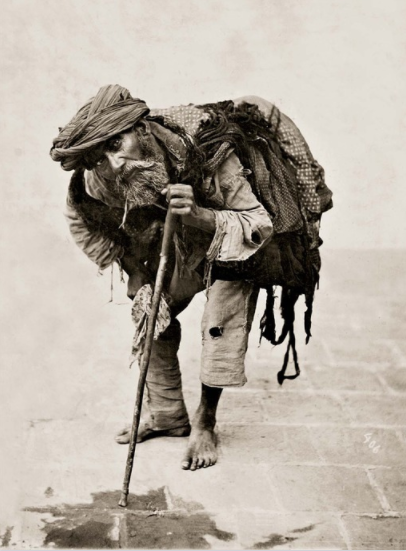
The eccentric man
What amuses and makes one laugh may hurt another from: "Mosques, mosques and sleeves" - in the summer camp, chapter 17
Learn More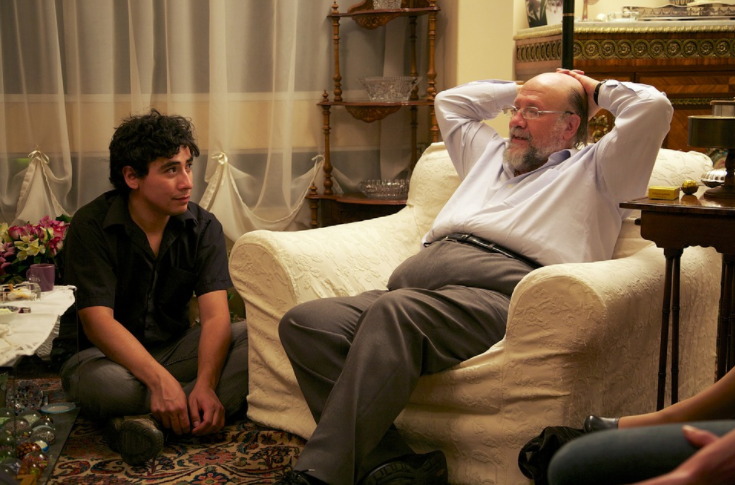
This could be your way
The danger of losing independent thinking alongside an exemplary figure
Learn More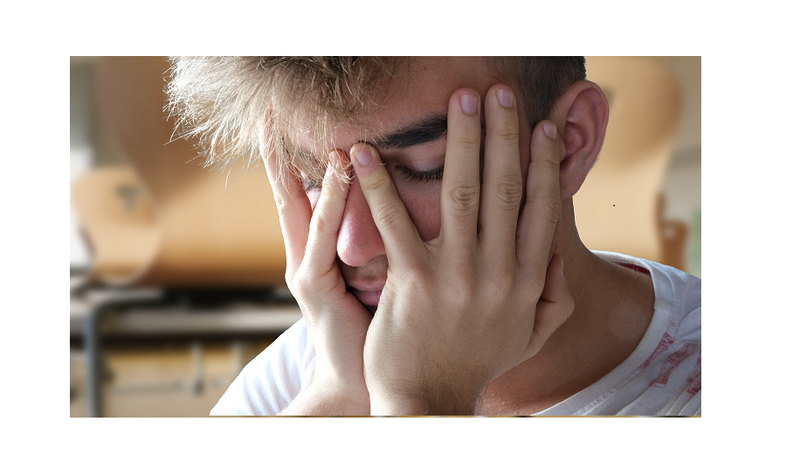
Youthful beatings. From: The Confession of a Butterfly
A teenage boy's stormy reflections on love, learning and life
Learn More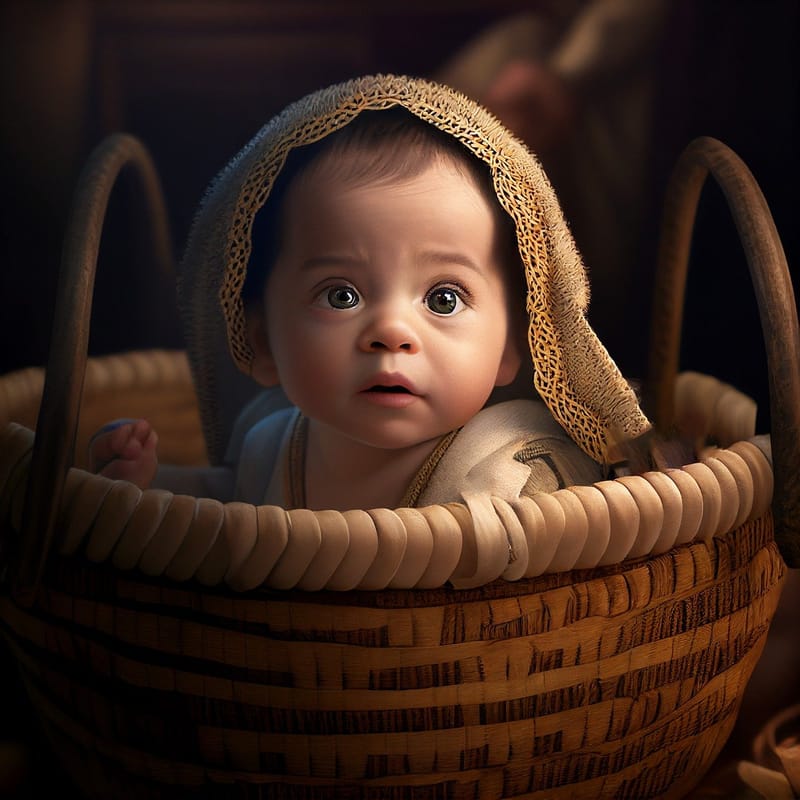
Children of the Bible - Moses, chapter 3
The shared truth is created from the sum of personal truths
Learn More
Children are human beings
Education can nurture what is in a person, but not fundamentally change him
Learn MoreStreet Children / Janusz Korczak
Chapter One: The Children's Shopper
On a fine autumn day, crowds of people moved along Ojazdowska Boulevard in Warsaw. The city's residents came out to enjoy the warmth, the sun, and the fresh air. After all, in a short time they would have to hide in their apartment cages, between the walls, and wait a whole six months until the paving stones emerged from the dirty snow, and the first spring bulbs appeared on the city's poor trees.
Chapter Two: What will happen?
Antek and Mania walked silently, holding the man's strong hand. Antek had trouble thinking, an hour ago he had been wandering along the avenue selling flowers. Then he met this strange man and talked to him. Then he left the man and sold flowers again. Then he bought himself cigarettes, got into a fight with Vysek, and ran away. Then... "What will happen to us now?" - he asked himself
Chapter Three: Count Zarotsky
The patron or buyer of Antek and Mania was Count Zarutsky. The father, Count Stepan Zarutsky, had a brother, but he had severed all relations with him since their last conversation. No one knew what the conversation was about; it was rumored to have ended very stormily. Count Stepan Zarutsky immediately moved to Zarutsky with his wife and two children and was never seen again.
Chapter Four: Confessions
We have called the palace in Zaruch several times a "tomb." So, let's go into this "tomb" with Mania and Antek and look at it carefully. The corridor, as already mentioned, was dark and long; on both sides of it were doors leading to different rooms. Three rooms on each side: a library, a gymnasium, a dining room, two smaller rooms and the count's office.
Chapter Five: The Escape
- Mr. Antek, please get up, I brought breakfast. Antek opened his eyes. Did they bring him breakfast? Milk? Oh! He had drained a glass of vodka to strengthen his bones. Oh, how well he slept; it was really a real sleep. And then they brought him breakfast and this old man even called him "Mr. Antek", and not just "Antek". Suddenly he became a master. Oh, if it were like this, as it is, but differently. There is something to talk about, it would be quite boring here. What is this here, some agricultural institution or prison, or the devil knows what, in any case something boring and that's it.
Chapter Six - The Feast of Healing
In one of the houses near the train station, Mr. Wojciech was the doorman. Mr. Wojciech had come to Warsaw from the countryside nine years ago with his three children; now he had six. The eldest wandered the streets with Antek and was even considered one of his friends for a while. Then the two boys had a fight over apples they had stolen from cargo ships, and their relationship was severed. The suitcase was now weighing heavily on Antek, and he remembered Wojciech and decided to leave his luggage with him.
פרק שביעי: יוּזֶ'ק טרללה
ווֹיצֶך מַזוּר עבד בתור שומר לילה ברחוב צַ'רְנְיֶקוֹבְסְקִי. נסים ונפלאות סופרו על כוחו הרב ועל הרפתקאותיו במסעות שערך לכל חלקי תבל. הסיפורים והאגדות על חייו גדלו והשתנו בקלות יתירה, וסייע לכך וויצ'ך עצמו, שלא הוסיף דבר ולא הכחיש דבר מעולם.
פרק שמיני: גיבור
הנר התקוע בפיית בקבוק הלך ודעך. בְּרוֹנֶק המלצר שכב על המיטה ונאם. הוא אהב לדבר כשהיה שתוי. הטבח רבץ על המיטה השנייה. על המזרון המונח על הרצפה שכבו אַנְטֶק ויוּזֶ'ק. - אתם יודעים ילדים, חיים כאלה כמו שאתם חיים עכשיו, אני אומר לכם שהם סתם בזבוז – נאם בְּרוֹנֶק . – מפני שבדרך כלל, אני אומר לכם, צריך לחשוב על זיקנה.
פרק תשיעי: מיום ליום
עלים מעולפים מחום היו תלויים על ענפי העצים העירוניים. כדור השמש הבוערת צרב את האספלט ואת אבני הכבישים. באוויר נישא אבק דק. עונת הבחינות בבית הספר הסתיימה ואימהות יצאו עם ילדיהן לכפר, למקומות מרפא בארץ ובחוץ לארץ. ילדי טרקלינים מהודרים, תלמידי כיתות מחניקות בבתי הספר, היו אמורים לנשום במשך חודשיים אוויר צח של הרים או ים. העיר התרוקנה מתושביה.
Chapter nine: From day to day
Leaves, faint from the heat, hung limply from the city trees. The burning sphere of the sun scorched the asphalt and the cobblestones. A fine dust lingered in the air. The school exam season had ended, and mothers had departed with their children for the countryside, to spas at home and abroad. Children of elegant parlors, students of stifling classrooms, were meant to breathe the fresh air of the mountains or the sea for two months. The city emptied of its inhabitants.
Chapter Eight: Hero
The candle stuck in the mouth of a bottle flickered and went out. Bronek, the waiter, lay on the bed and began to declaim. He loved to talk when he was drunk. The cook was sprawled on the second bed. On a mattress on the floor lay Antek and Józek.
Chapter seven: Loony Józek
Wojciech Mazur worked as a night watchman on Czerniakowska Street. Miracles and wonders were told about his great strength and about the adventures he had experienced on journeys to every corner of the world. The stories and legends about his life grew and changed with ease, helped along by Wojciech himself, who never added anything and never denied anything.
Chapter six: The Mourning Feast
In one of the houses near the train station, Mr. Wojciech filled the role of the doorman. Mr. Wojciech arrived in Warsaw from the village nine years ago with his three children; today he already has six. The eldest wandered the streets with Antek and was even considered one of his friends for a time. Afterwards, the two boys fell out because of apples they had stolen from cargo ships, and the relationship between them was broken off. The suitcase was now heavy for Antek, and he remembered Wojciech and decided to leave his baggage with him.
Chapter five: The Escape
"Mr. Antek, please get up, I brought you breakfast." Antek opened his eyes. They brought him breakfast? Milk? Hey! He could have downed a shot of vodka to strengthen his bones. Ah, how well he had slept; that had been real sleep. And now someone brought him breakfast, and the old man even called him "Mr. Antek," not just "Antek." Suddenly he had become a mister. Ah, if only it were like this, just like this — but different. No doubt about it, this place was going to be seriously boring
Chapter four - Confessions
We had called the palace in Zaruts several times "the tomb." Let us now, together with Mania and Antek, enter this "tomb" and observe it closely. The corridor, as previously mentioned, was dark and long; on both sides were doors leading to various rooms. Three rooms on each side: a library, a gymnasium, a dining room, two smaller rooms, and the Count's office.
Chapter Three: Count Zarutzki
The patron—or buyer—of Antek and Mania was Count Zarutsky. The elder Count, Stefan Zarutsky, had a brother, but he severed all ties with him following their last conversation. No one knew the content of that conversation; according to rumor, it ended in a very stormy manner. Shortly afterwards, Count Stefan Zarutsky moved to Zarutsk with his wife and their two children—and no one saw him again.
Chapter two: What will happen?
Antek and Mania walked silently, holding the man's strong hand. Antek struggled with his thoughts. An hour ago, he was still wandering along the avenue, selling flowers. Then he met this strange man, listened to him. Then he left the man and sold flowers again. Then he bought cigarettes, got into a fight with Witzek, ran away. Then... "What will happen to us now?" - he asked himself.
Chapter one: The Child Buyer
On a pleasant autumn day, a crowd of people strolled along Warsaw's Ujazdowskie Avenue. The city's residents came out to enjoy the warmth, the sunshine, and the fresh air. After all, it wouldn't be long before they'd have to retreat to their apartment cages, hidden between walls, waiting for a full six months until the city's cobblestones would emerge from the filthy snow, and the first buds of spring would appear on the city's pitiful trees.
Herschel's three voyages
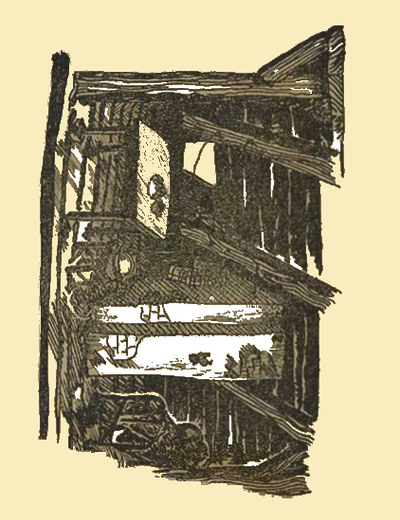
The text was written by Janusz Korczak as an introduction to the story "The Three Voyages of Herschel". Korczak handed it over to Jerahmiel Weingarten in 1926 and asked him to translate it from Polish to Hebrew. Weingarten accepted the request, translated the introduction into Hebrew and published it in the Hebrew newspaper, "Alim", which he edited in Poland.
read more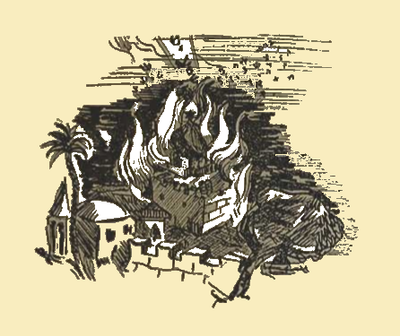
Yitzhak Perlis describes the background and context in which the story was written
read more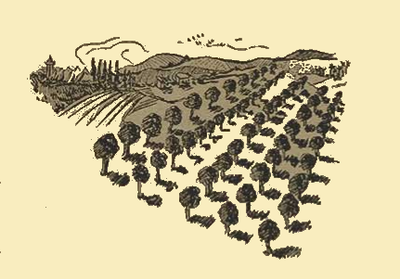
Jerahmiel Weingarten tells about the conversation he had with Korchak, in which Korchak told him about the story he was working on writing, and even asked Weingarten to translate the introduction, which was already written at the time, into Hebrew.
read moreספרים אודות קורצ'אק
I have something to tell you
A page from a citizen's diary
Written by: Eitan Agaiv, Itai Shmueli and Ido Shohat. School: Yitzhak Rabin, Tel Mond Teacher: Iris Katz
Tomorrow will be good
Written by: Galia Nitzan and Noga Reichenstein Yitzhak Rabin School, Tel Mond
A page from the diary of an Israeli citizen in 2025
Written by: Itamar Mashiach, 8th grade student, Yitzhak Rabin High School, Tel Mond
Personal diary 26.11.25
Written by: Daria Sharr and Tamar Nitzan, 8th grade, Yitzhak Rabin High School, Tel Mond
Journal pages
Written by: Noam Pitshon and Noga HaSchal 8th grade, Yitzhak Rabin School, Tel Mond Teacher: Iris Katz
A page from a citizen's diary in 2025
Written by Yoav Haschel, 8th grade, Yitzhak Rabin School, Tel Mond. Teacher: Iris Katz
Personal diary
Written by: Polly Weinblatt, 8th grade, Yitzhak Rabin High School, Tel Mond. Teacher: Iris Katz
A child's diary in 2025
Written by: Noam Welt and Haran Laub School: Yitzhak Rabin, grade: 81, settlement: Tel Mond, teacher: Iris Katz
A page from a citizen's diary
Written by: Shahar Yaacov and Ithi Levinson, 8th grade, Yitzhak Rabin High School, Tel Mond. Teacher: Iris Katz
tomorrow will be better
Article: Yakin Sweid, 10 years old, from Paki'in
From the diary of Adi 25
Written by: Stav Levy, 8th grade, High School Rabin Tel Mond Teacher: Iris Katz.
Personal diary, October 7, 2025
Written by: Itamar Gefen, grade 87, Rabin School, Tel Mond. Educator: Anat Moshe
Tomorrow will be good
Written by: Amit Lex, 7th grade, Rabin Education House, Tel Mond Educator: Anat Moshe
Tomorrow will be a good page in the diary of an Israeli citizen in 2025
Written by: Ariel Tzallikhin, 7th grade, Rabin Education House, Tel Mond Educator: Anat Moshe
Tomorrow will be good
Written by: Noya and Gaya, 6th, Kiryat Hanachun Rabin, Tel Mond. Educator: Galit Kohani
Dear Diary
Article: Stav Murad, 6th grade, Rabin School, Tel Mond. Educator: Galit Kohani
Tomorrow will be good
Writer: Itamar Golani, 6th grade, Rabin High School, Tel Mond. Educator: Galit Cohen
Tomorrow will be good
Written by: Rani Afek, grade 6, Rabin High School, Tel Mond. Educator: Galit Kahani
Dear Diary
Article: Nicole Levitt, grade 6, Rabin School, Tel Mond. Educator: Galit Kohani
A page from a citizen's diary
Writer: Liam Uziel, grade 81, High School Rabin, Tel Mond. Educator: Iris Katz
"Tomorrow will be good" - a page from the diary of an Israeli citizen in 2025
Written by: Alon Mordechai, 7th Street, Rabin School of Education, Tel Mond. Educator: Anat Moshe
Journal pages
Written by: Michael Schulzinger, 7th grade, Rabin Tel Mond school. Educator: Anat Moshe
Journal pages
Written by: Tomer Landau, 7th grade, Rabin Tel Mond educational institution Educator: Anat Moshe.
Personal diary
Written by: Itai Hayman, grade 7, Rabin Education House, Tel Mond Educator: Anat Moshe
Personal diary
Written by: Omer Kamil, 7th grade, Rabin Education School, Tel Mond. Educator: Anat Moshe
Tomorrow will be good
Written by: Itai Zaltz and Yair Barash Or, 8th grade, Rabin Education School, Tel Mond. Educator: Orit Dolev Damashchak
tomorrow is better
Written by: Daniel Yokav and Aviv Kamisa, grade 82, Rabin Education School, Tel Mond. Educator: Orit Dolev Damashchak
A better tomorrow - journal page
Written by: Noa Ifergan and Noa Ben David, 8th grade, Rabin School, Tel Mond. Educator: Orit Dolev Damashchak
A soldier's story
Written by: Omer Hacarmali and Yuval Katz, 8th grade, Rabin Education School, Tel Mond. Educator: Galit Hachani
a better day
Written by: Elroy Hecht, grade 87, Rabin Education School, Tel Mond. Educator: Anat Moshe
The story of a survivor - a skilled page
Written by: Milli Geva and Adi Hagai, grade 84, Rabin Education House, Tel Mond. Educator: Sophie Nizri
Personal skilled page
Article: Noa Roth, grade 87, Rabin Education School, Tel Mond. Educator: Anat Moshe
My dear diaries - the story of abductees who returned from captivity
Written by: Ohad Levy and Enog Kenfo, 8th grade, Rabin School of Education, Tel Mond Educator: Galit Kahani
My dear diary - Thoughts for recruitment
Written by: Elia Cohen, 8th grade, Rabin School, Tel Mond. Educator: Galit Kohani
A page from a citizen's diary, year 2025
Written by: Itai Zemach, 8th grade, Rabin School, Tel Mond Educator: Galit Kahani
Hello, dear Yomani
Written by: Amir Segev Nascimento and Harel Mamalia, 8th grade, Rabin Tel Mond School
tomorrow is better
Written by: Ofer Kaner, grade 87, Rabin Education School, Tel Mond. Educator: Anat Moshe
Dear Diary
Written by Maayan, grade 84, Rabin School, Tel Mond. Educator: Sophie Nizri
Korchak Award for Creative Writing by Tsila Rubinstein-Polisher
A creative writing contest of short stories on the topic of democracy is underway.
A rallying cry - נדאה for children and boys
To register - click on "read more" and enter the "call" found here
Instructions for participating in the short story writing contest on democracy
Instructions for participating in the competition
Please read the participation guidelines before registering
Instructions for participating in a prize-bearing competition in writing the short story - 2023
Instructions for participating in a contest
Donor page
Shulamit Goren-Robinstein
יצירה בהשראת סיפורי קורצ'אק
Dr. Esther (Esti) Shahaf
Amateur illustrator
Illustration inspired by the story "Terribly Funny"
Moshe Peleg
Creative artist, painting and sculpture teacher
Paintings inspired by Korczak's short stories
Adi Segal Weissberger - Adi Segal Weissberger
A family woman remembers her house. Engages in occupational therapy and parent guidance in the Adler approach, develops the postcard project of #shirah_glaviha
The song was inspired by a legend about a song, from the camp stories, by Janosz Korczak
Anat Regev-Reishin - Anat Regev-Reishin
Poet and director of the circle for creators "Bet and Kol"
A song inspired by the story: "A legend about a song"
Rachel Dayan - Rachel Dayan
Educator, poetry writer. Lives in Katsrin
The song was inspired by the story "At Mrs. Kiri-Sklodowska's" by Janusz Korczak
Department of Civil Education and Coexistence

"Only through education can the world be changed for the better"
(Janusz Korczak)
Janusz Korczak is known to all mainly for his
heroic walk to death with the children of the Jewish orphanage he ran, despite the opportunity he was given to save himself. Korczak - The writer, doctor, person and educator educated for the love of the child and demanded to give children human rights. Korczak's life's work is raises humanistic, civic and democratic values that are also reflected in his stories and writings. The Headquarters for Civil Education and Coexistence is a opartner of the Volunteer Project "Israel reads Korczak", initiated by the Korczak Educational Institute of Israeli in collaboration with the Polish Institute in Israel. The project is designed to promote the same values according to which Korczak lived and worked, and are the essence of the headquarters for civic education and coexistence. At the core of the project are short videos in which people from all corners of Israeli society read short stories written by Janusz Korczak. The role of the Civil Education and Coexistence Headquarters in the project is in the development of lesson plans that combine democratic and civic values and open a window to Korczak's educational doctrine from a civic perspective. Entrance to the lesson plans on the Teaching Staff Portal, the Division for Civil Education and Coexistence
(Janusz Korczak)
Janusz Korczak is known to all mainly for his
heroic walk to death with the children of the Jewish orphanage he ran, despite the opportunity he was given to save himself. Korczak - The writer, doctor, person and educator educated for the love of the child and demanded to give children human rights. Korczak's life's work is raises humanistic, civic and democratic values that are also reflected in his stories and writings. The Headquarters for Civil Education and Coexistence is a opartner of the Volunteer Project "Israel reads Korczak", initiated by the Korczak Educational Institute of Israeli in collaboration with the Polish Institute in Israel. The project is designed to promote the same values according to which Korczak lived and worked, and are the essence of the headquarters for civic education and coexistence. At the core of the project are short videos in which people from all corners of Israeli society read short stories written by Janusz Korczak. The role of the Civil Education and Coexistence Headquarters in the project is in the development of lesson plans that combine democratic and civic values and open a window to Korczak's educational doctrine from a civic perspective. Entrance to the lesson plans on the Teaching Staff Portal, the Division for Civil Education and Coexistence
Moreshet - Mordechai Anielewicz Testimony House
משלנו - הצעות פדגוגיות
Omelet - a pedagogical proposal
Article: Dr. Sarah Hauptman
From here and there - a collection of lesson plans from the network
Following the stories of Janusz Korczak - for preschoolers
The educators who contributed ideas for incorporating the short stories in kindergarten and first and second grades
After the trip
A cotton wool garden
The first say at school
omelet
Why people pray
What's his name
About the sparrows
About a young deer and a puppy
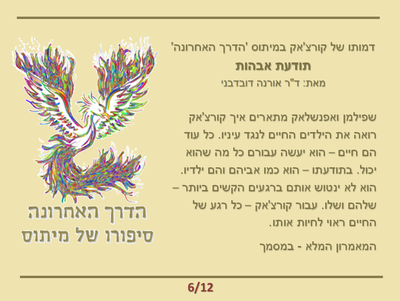
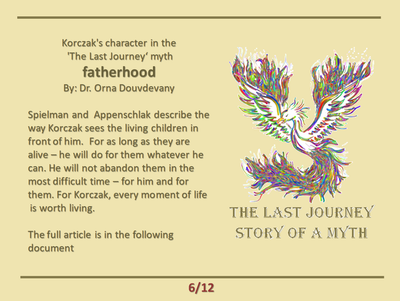
הדרך האחרונה – מקורות למאמרים
סיפורו של מיתוס
'The last journey'' - articles
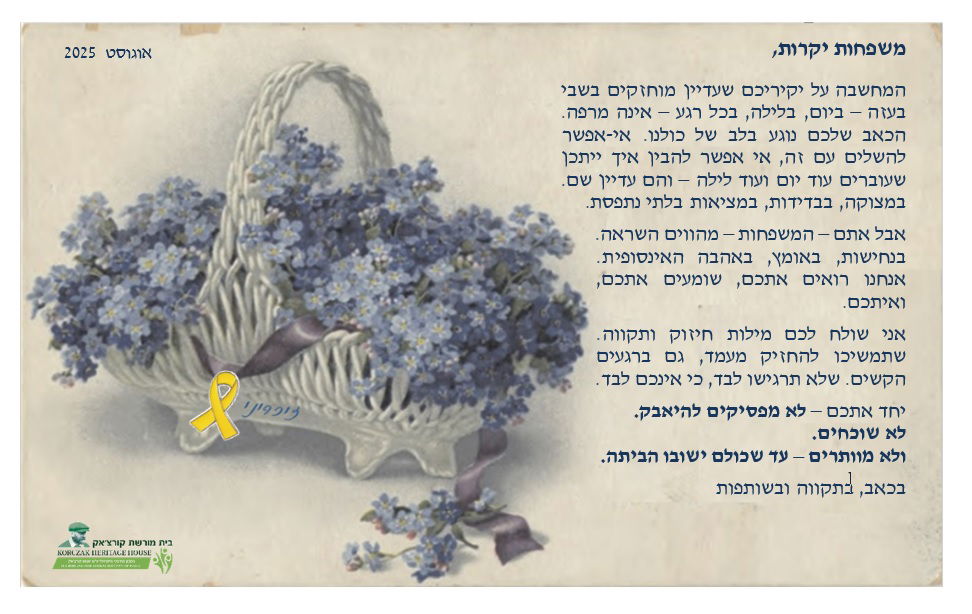
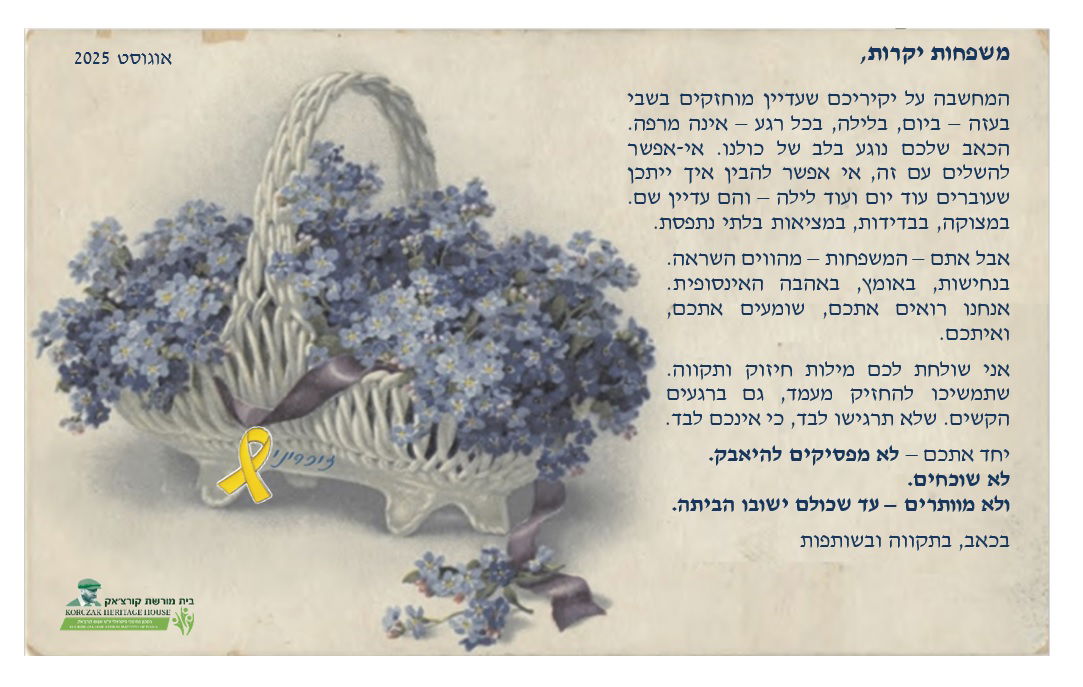
Postcards of support for the families of the kidnapped
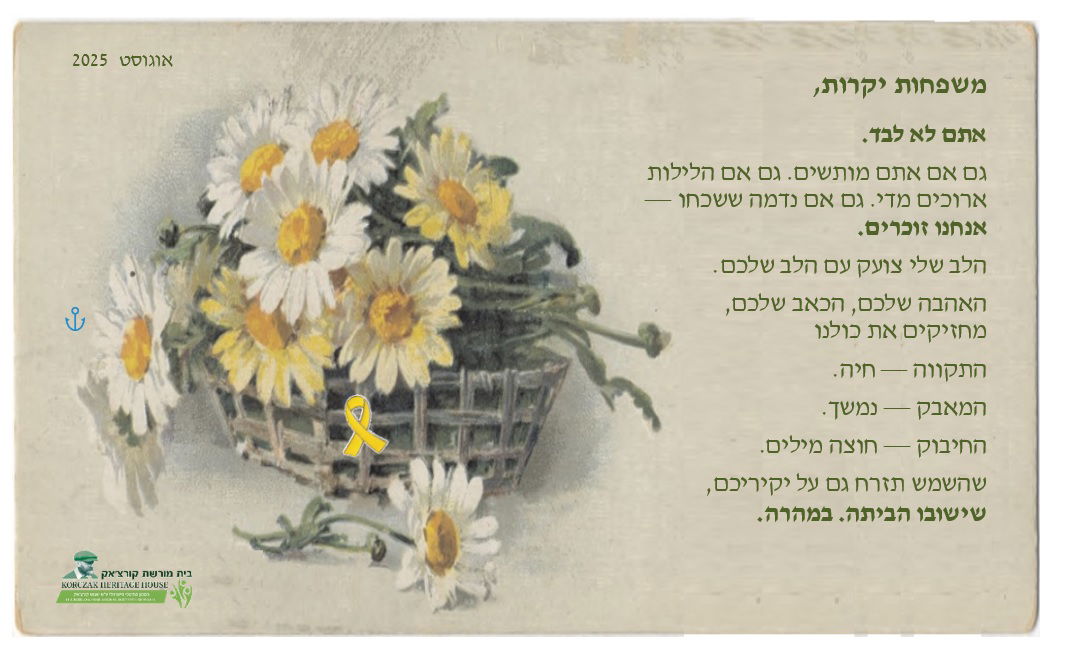
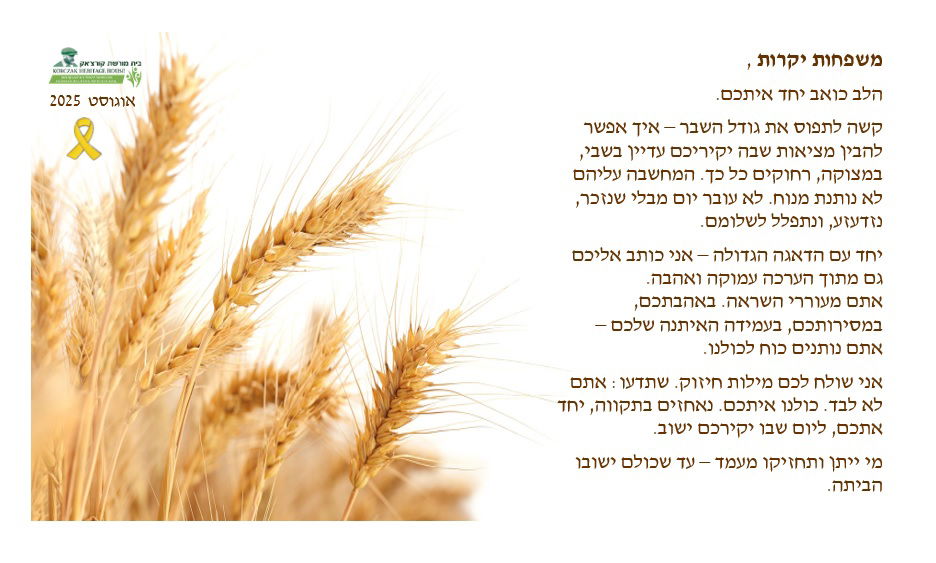
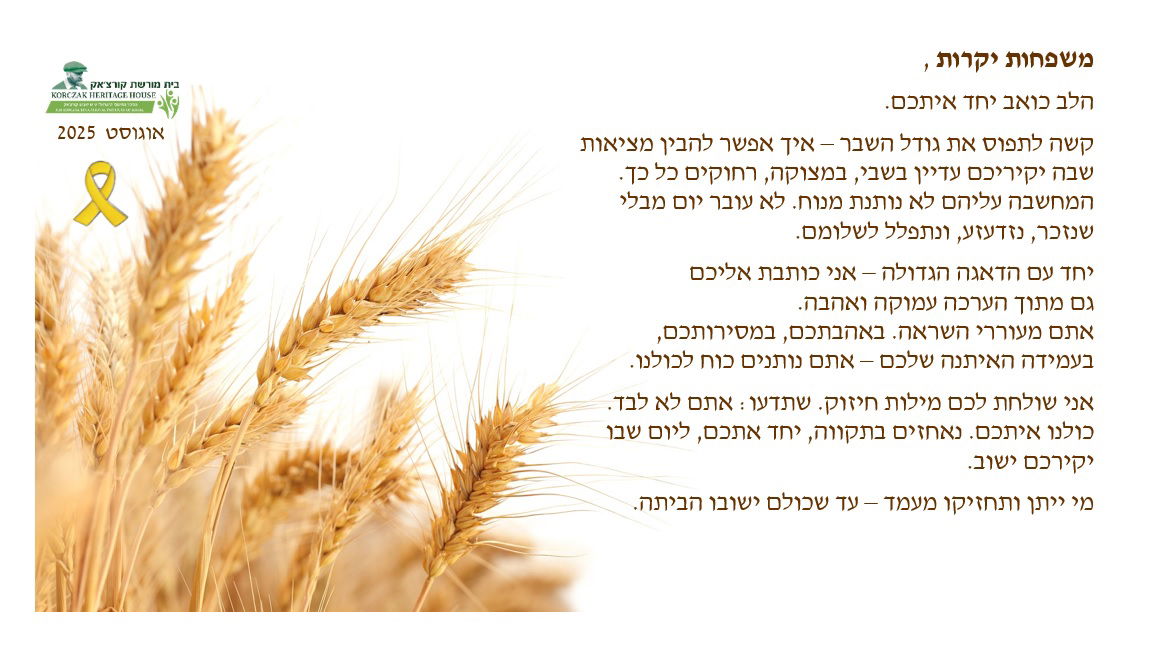
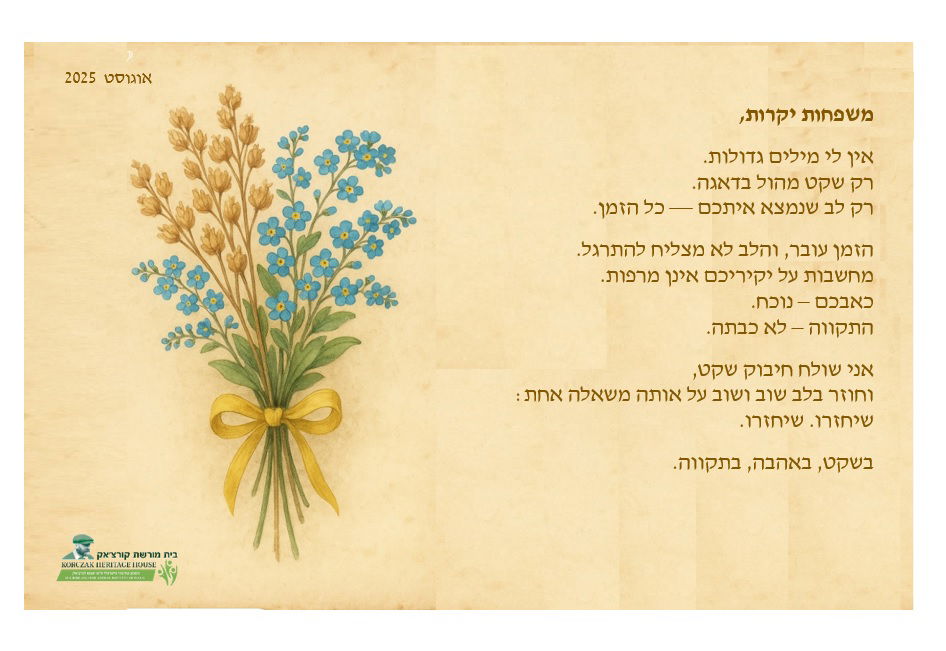
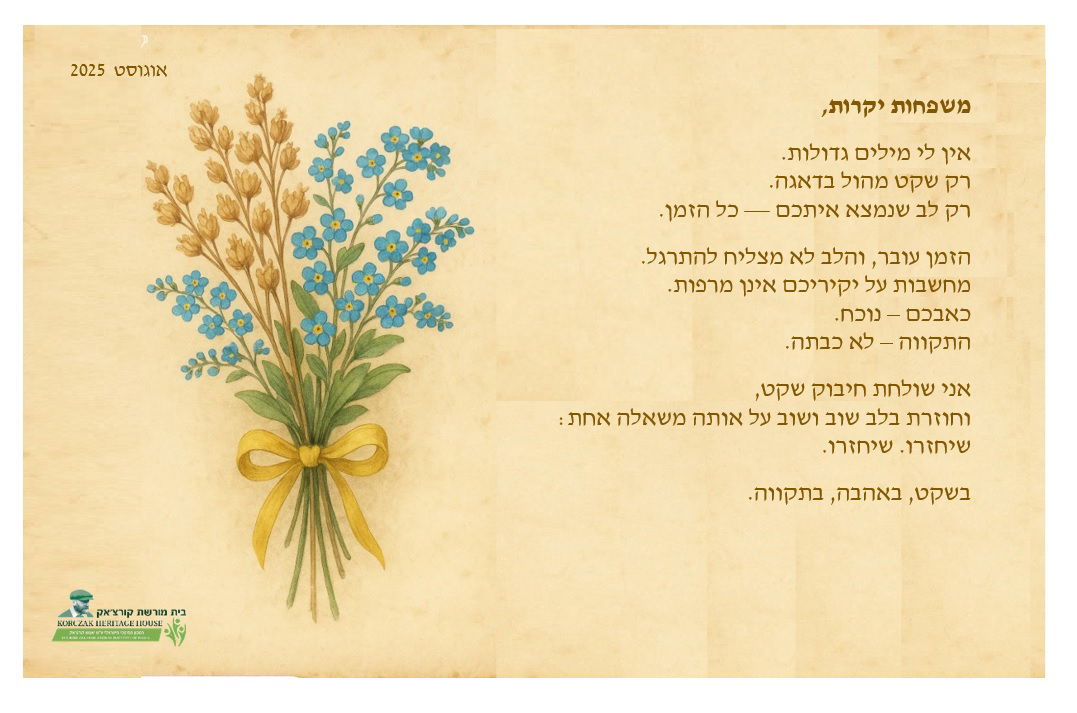
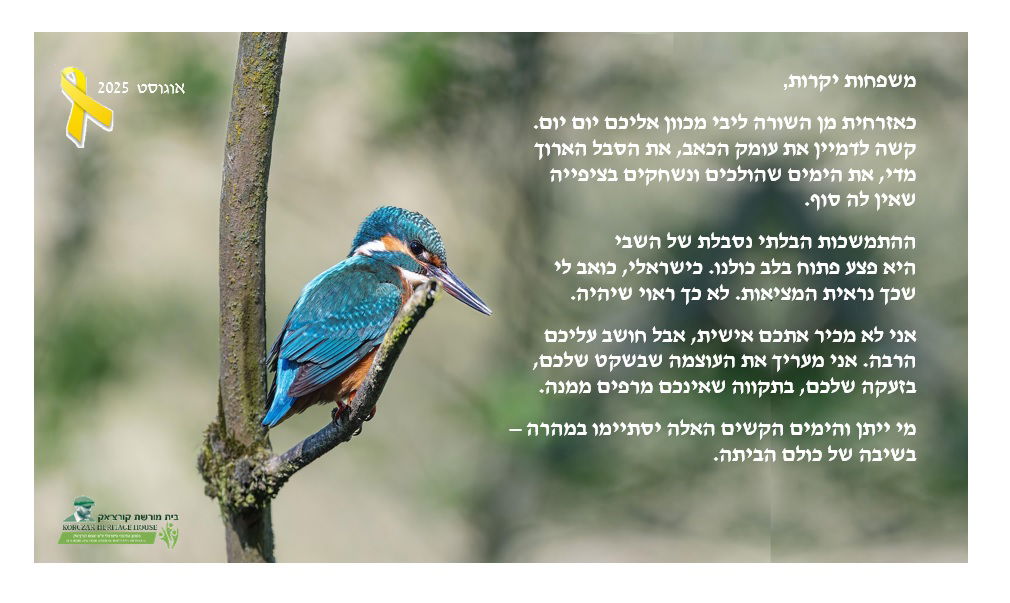
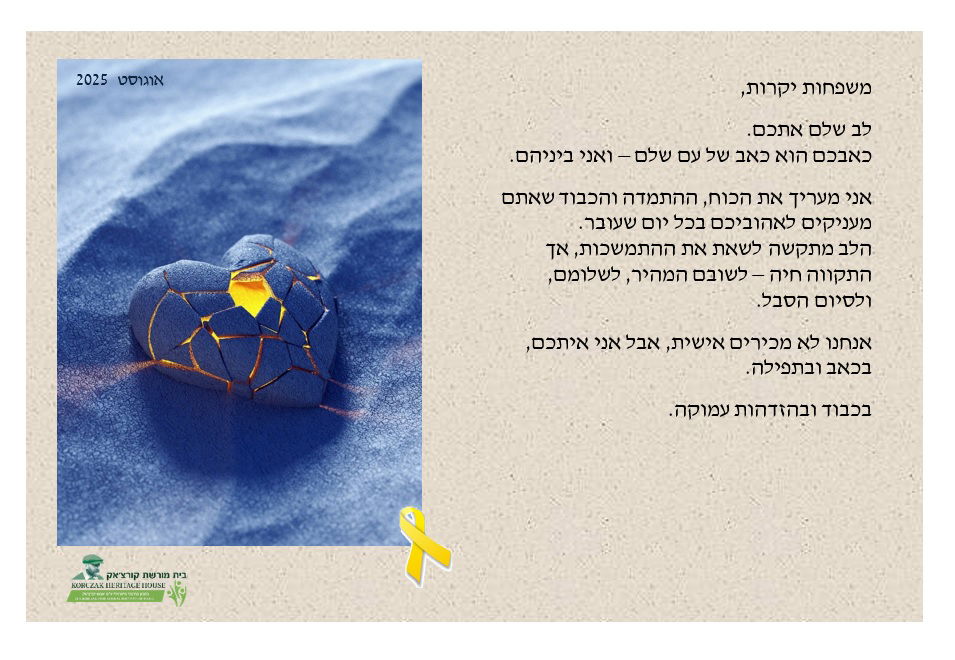
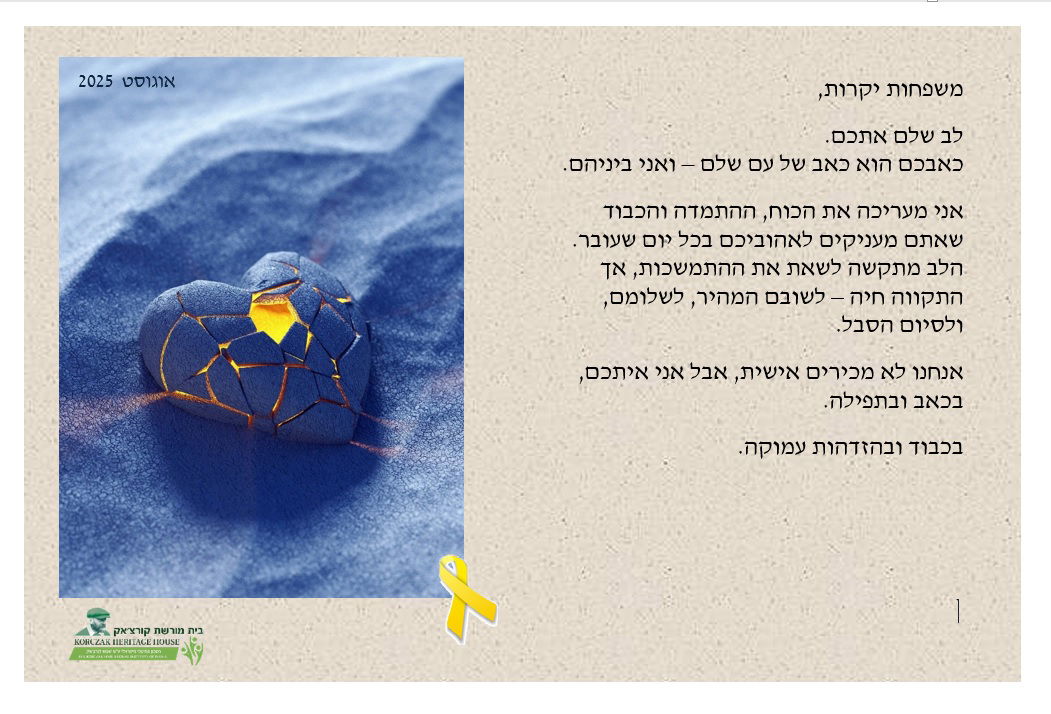
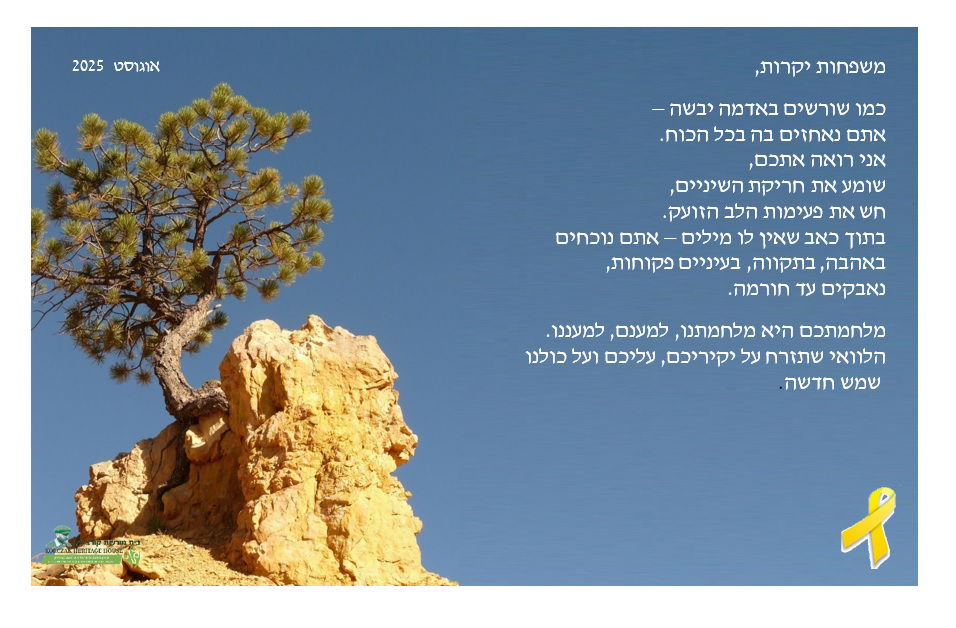
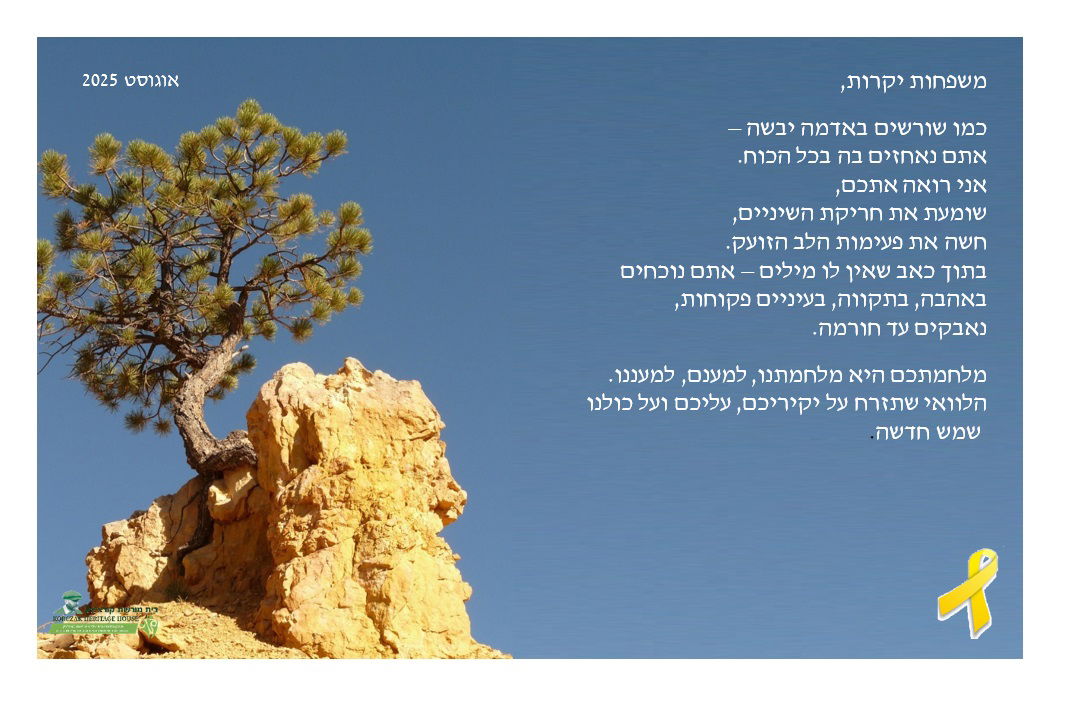
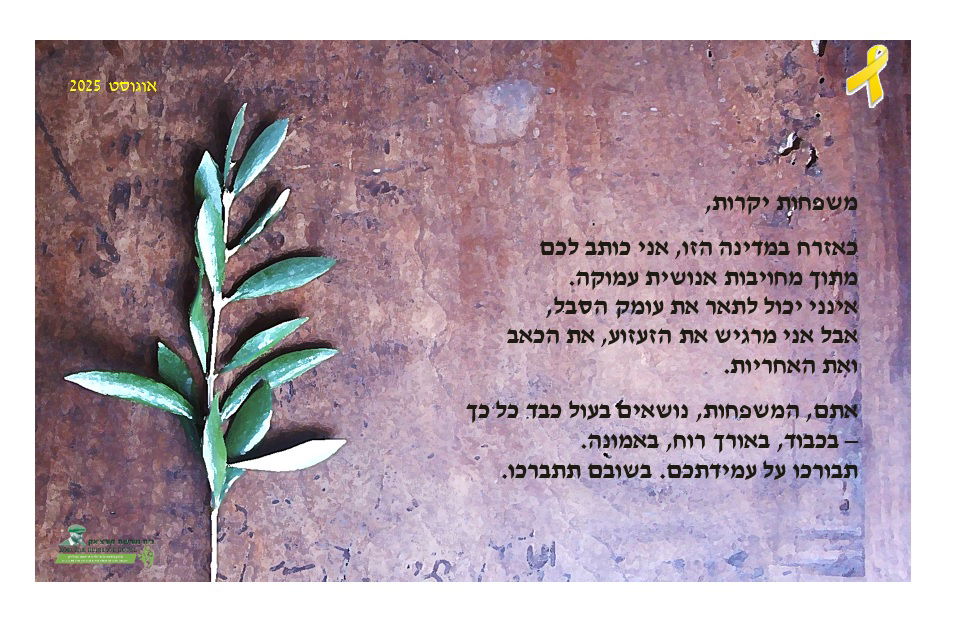
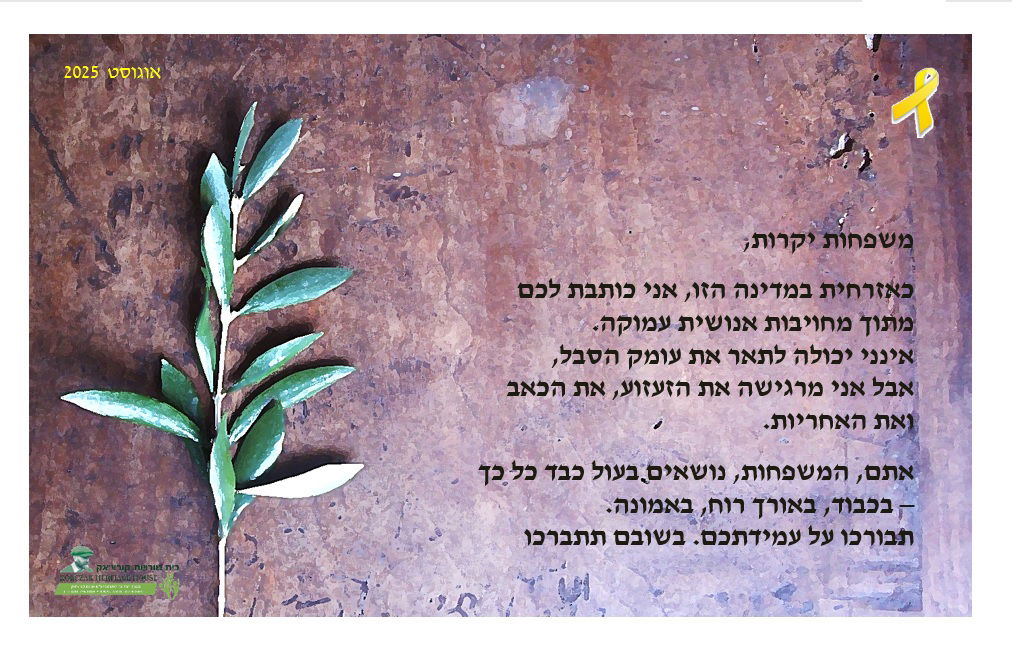
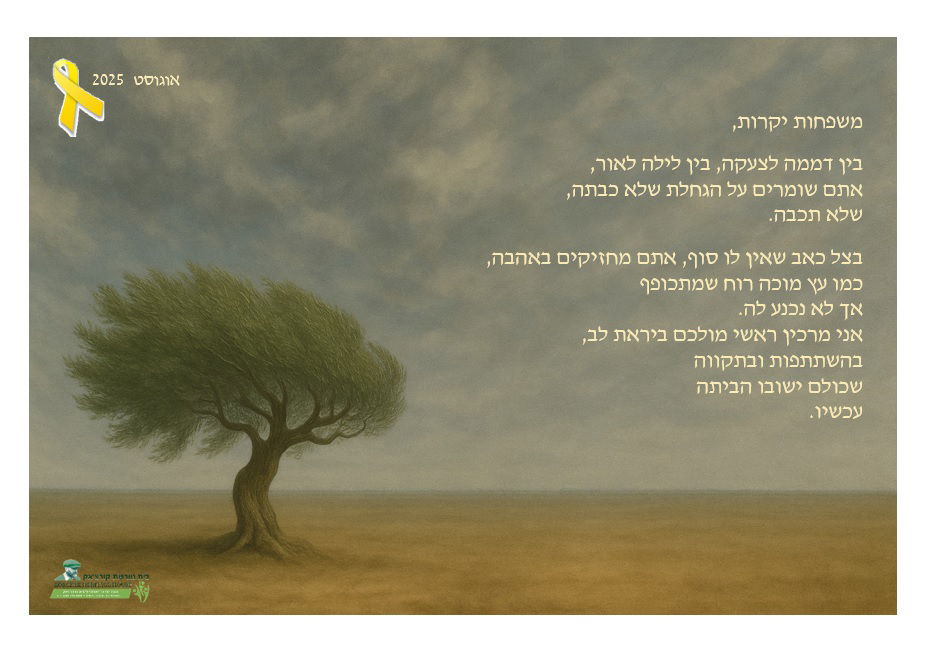
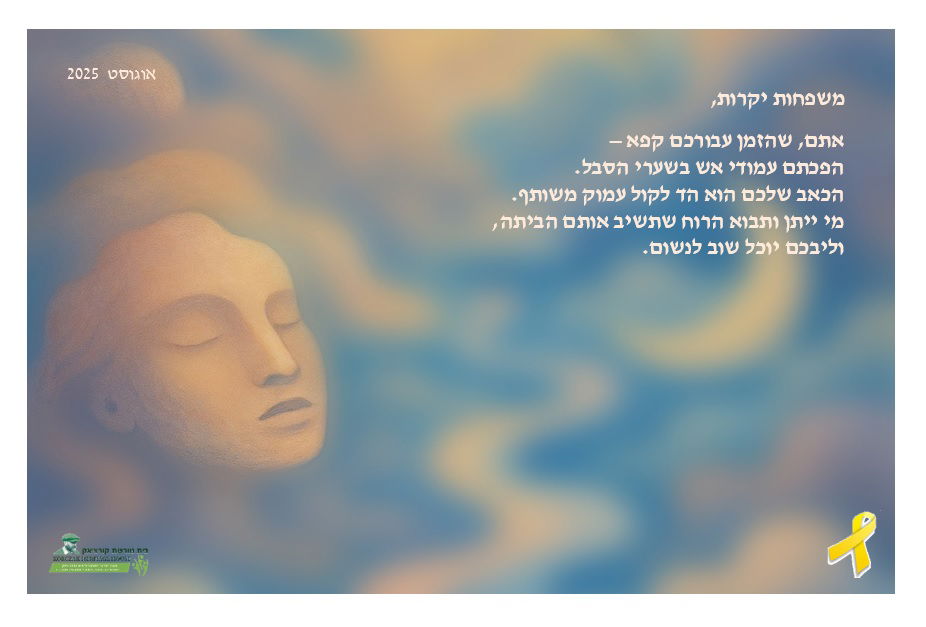
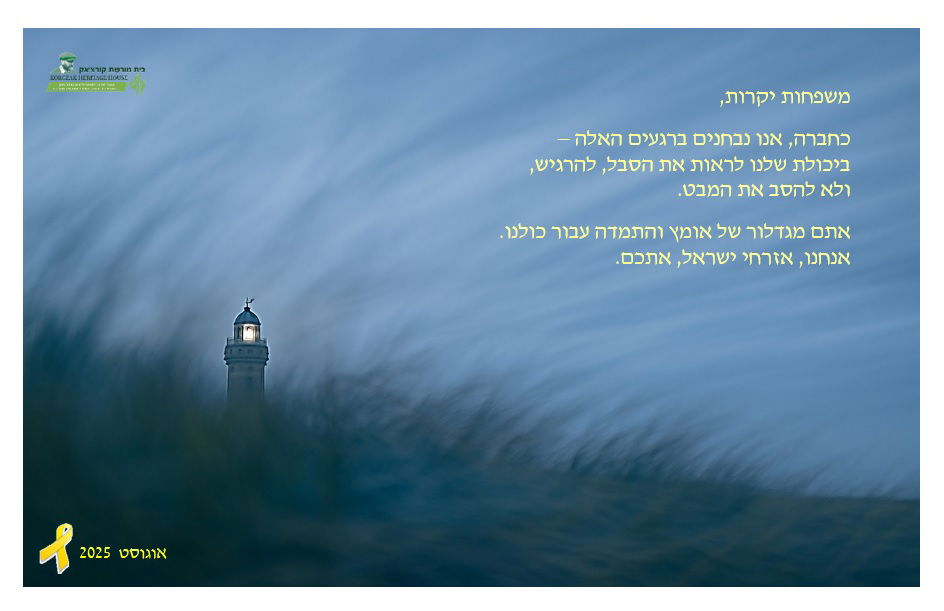
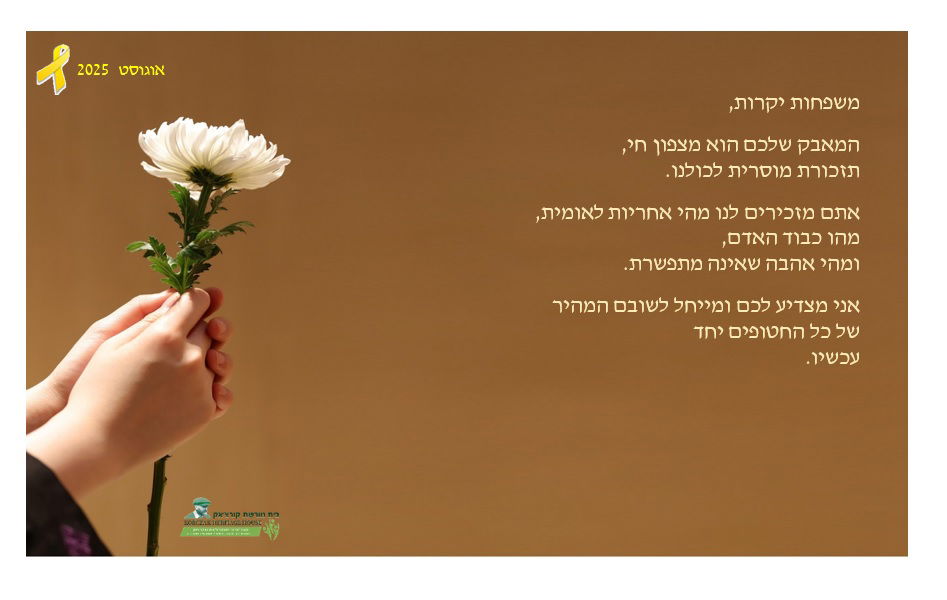
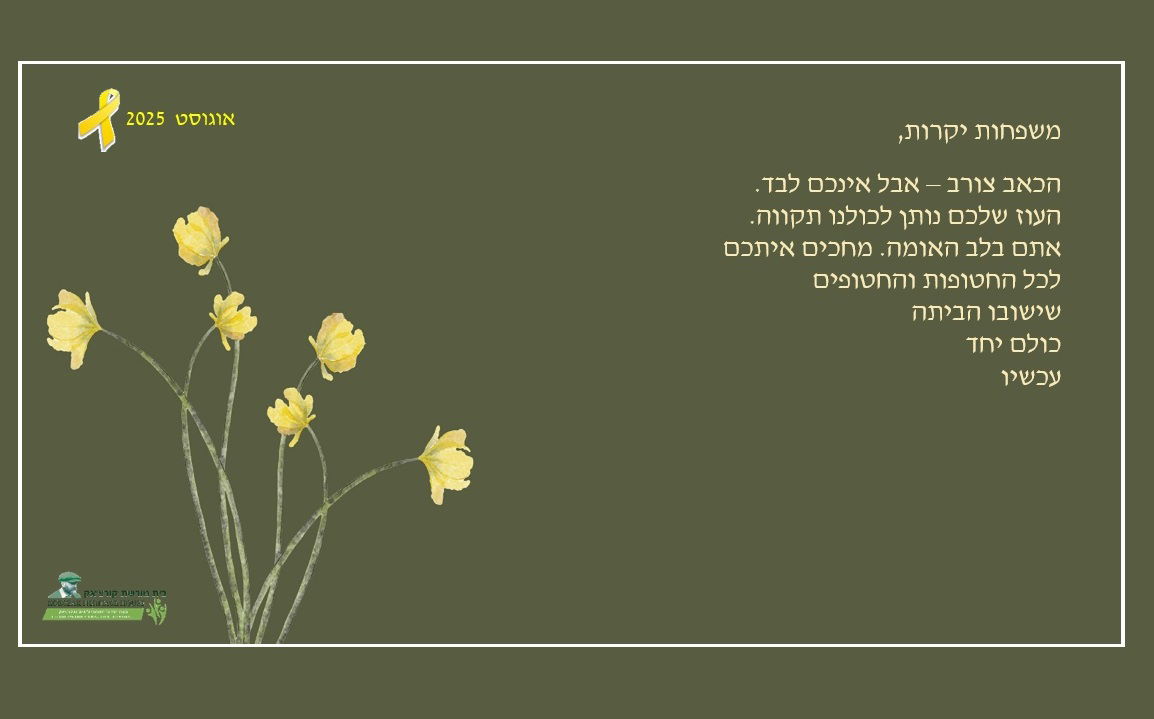
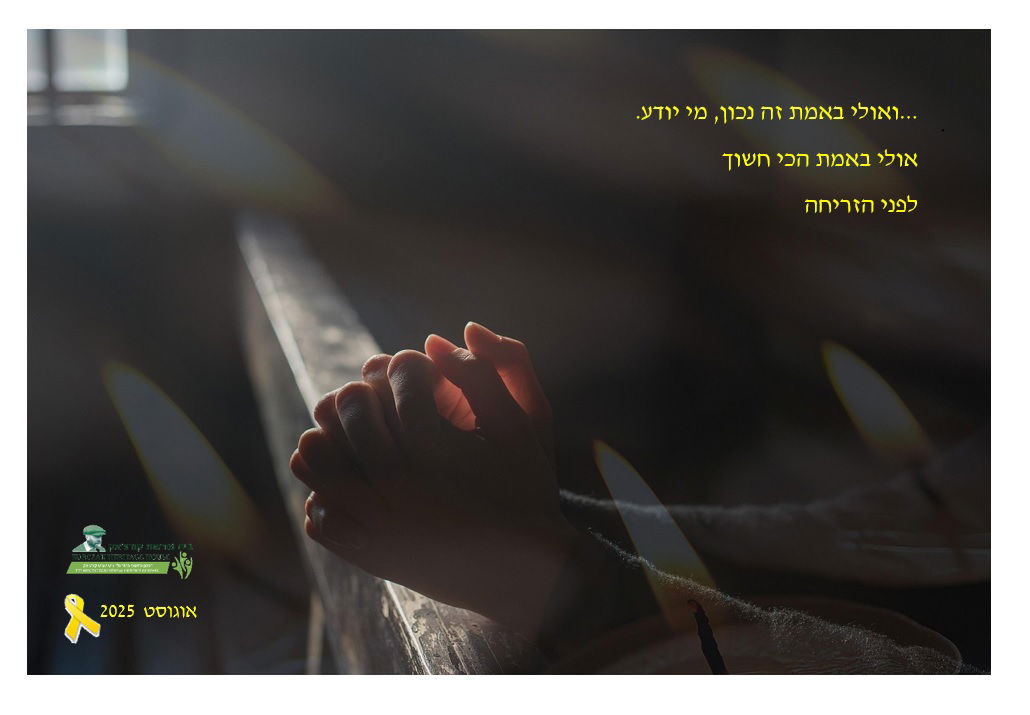
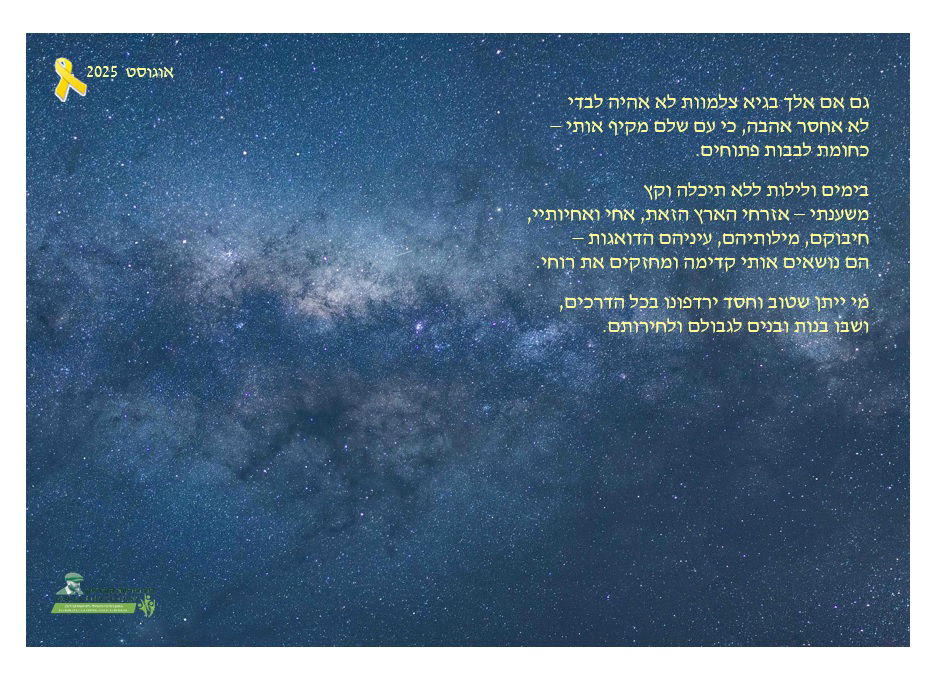
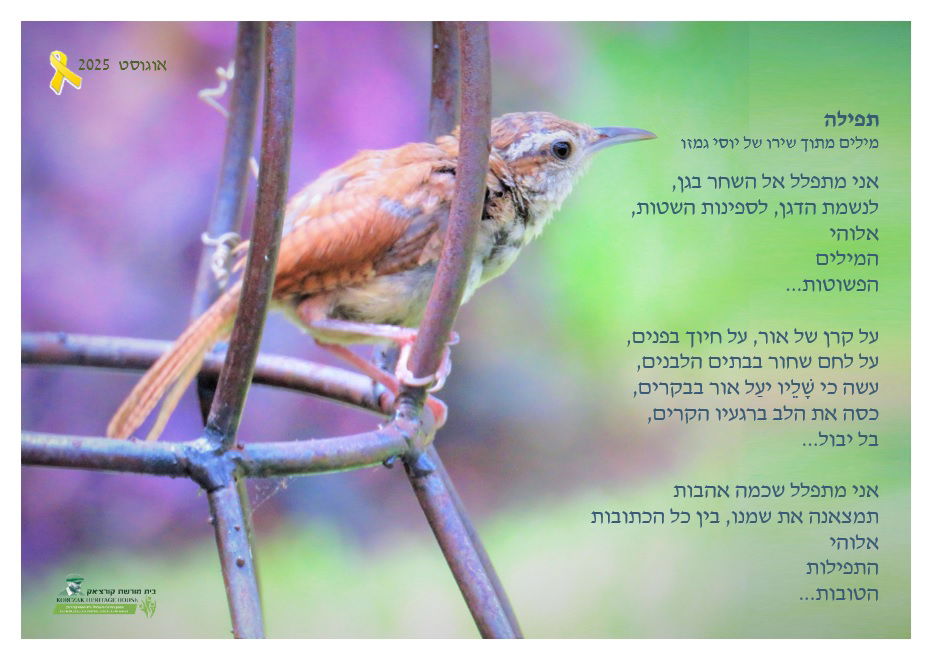



"Only through education can the world be changed for the better."
"Many tears could have been saved if adults had known the child."
"Fixing the world will be possible by fixing education."
The Polish Institute

The Polish Institute in Israel is a cultural body initiating cultural, educational and artistic events in order to present Polish culture to the Israeli public. Since 2000, the Polish Institute creates collaborations with the leading educational and cultural institutions in Israel to form events, festivals and activities in the fields of art, dance, theater, history, science, cinema, design and more. The institute initiates workshops, professional tours and meetings between Israeli and Polish artists in order to enable a multicultural discourse and collaboration between the two societies, while mutual enriching and deeply relating to the common past and future. The Polish Institute offers Polish language courses and operates a library containing a variety of Polish books and films. The institute holds various events in all fields of the arts. The activities are aimed at the Israeli audience, both old and young. The Polish Institute's library includes over 6,000 titles ranging from Polish classics to modern poetry and prose. Those who do not read Polish can find a selection of Polish art, tourism and literature albums translated into English and Hebrew. As part of the institute's activities, it has an educational department that plans programs and advanced training for teachers and counselors who accompany the youth delegations to Poland. The Department of Education also organizes conferences, seminars and professional tours in Poland, in deep acquaintance with the special relationship between the two societies and states, Israeli and Polish and with regard to the greatest tragedy of the Jewish people, which occurred mostly on Polish soil. The Institute's activities address these historical aspects, alongside cultural and social aspects on which the connection between the countries is based and is aimed at a variety of audiences, looking ahead to a common future.
our partners
I have something to tell you
contact
- 4 Avizohar st., Jerusalem, Israel
- חשבון מס' 160751, בנק מזרחי טפחות, סניף שערי צדק י-ם.